


There are no products in your basket.
Divers Go Rogue
When #fourthelementdivecrew became #fourthelementcavers
with Helen Frances and Rannvá Tórfríð Jørmundsson
For the first few minutes of climbing into the Swildon’s Hole cave, your main priorities are not to slip off the rocks and not to let water get in your wellies. Then you slide down a waterfall and land waist deep in cold water, and suddenly none of it really matters anymore. And that’s when the fun starts.
Rannva is a cave diver and explorer. I am an open water diver with cave-curious tendencies. When caver, cave diver and Thai Cave Rescuer Chris Jewell invited us to go caving with him, we squealed for what was probably an annoyingly long time. His off-hand warning that we would get wetter dry caving than cave diving only served to excite and intrigue us more, and so on a bitingly cold, blustery December day, we set off from Cornwall and headed to the Mendips and the land of hills, cheese, and caves – Cheddar.
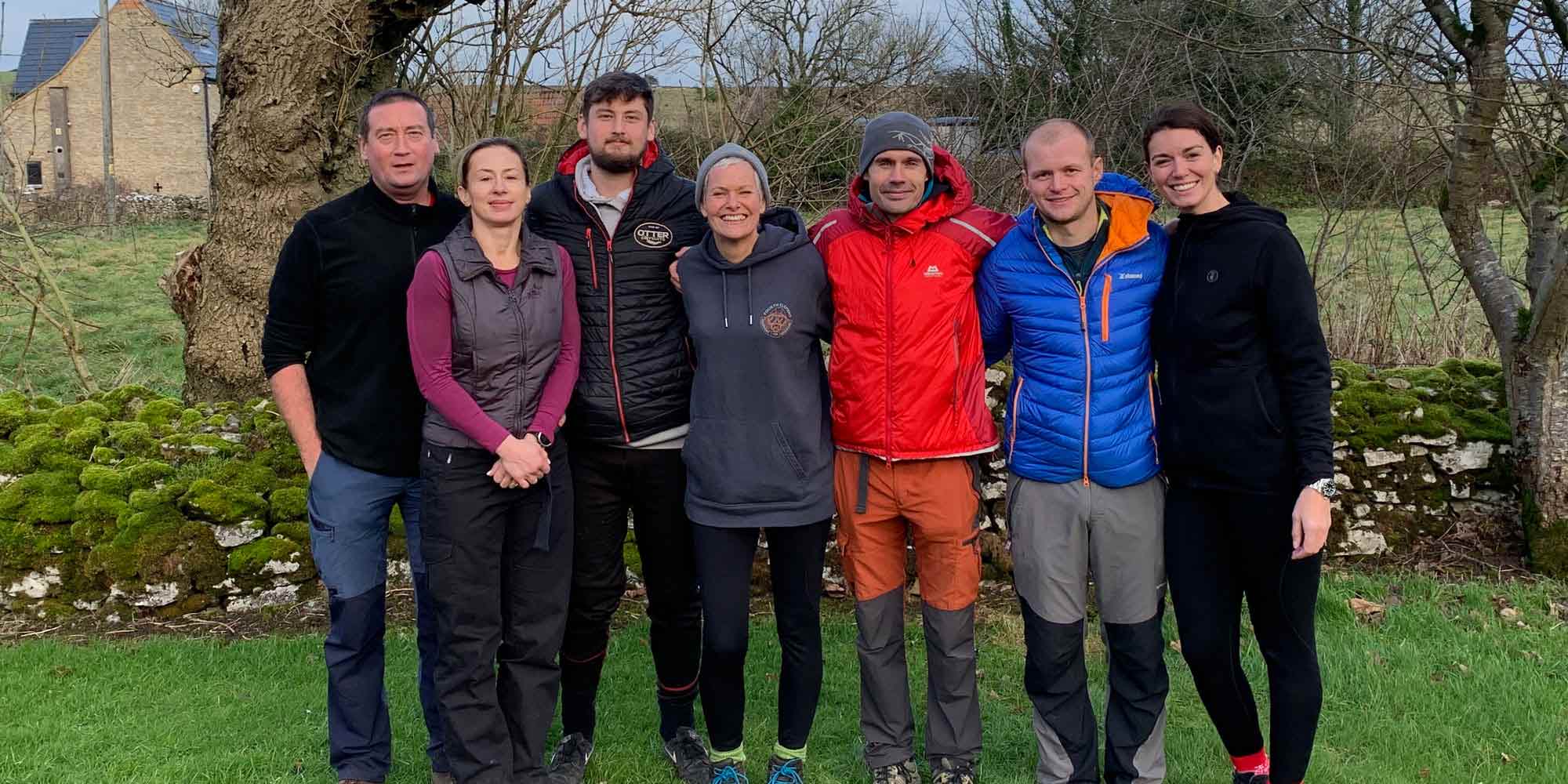
The thing that strikes you first when you enter the Wessex Cave Club hut is the warmth – both from the large wood burner that has probably dried out hundreds of sodden socks in its time, and from the strangers, soon to be friends, who welcome you in. Chris was reported to be “probably underground somewhere” so we settled in and asked questions that only a newbie could ask – how cold do your hands get, how cold do your feet get, can you wee in a cave – but no-one seemed to mind and we felt very encouraged.
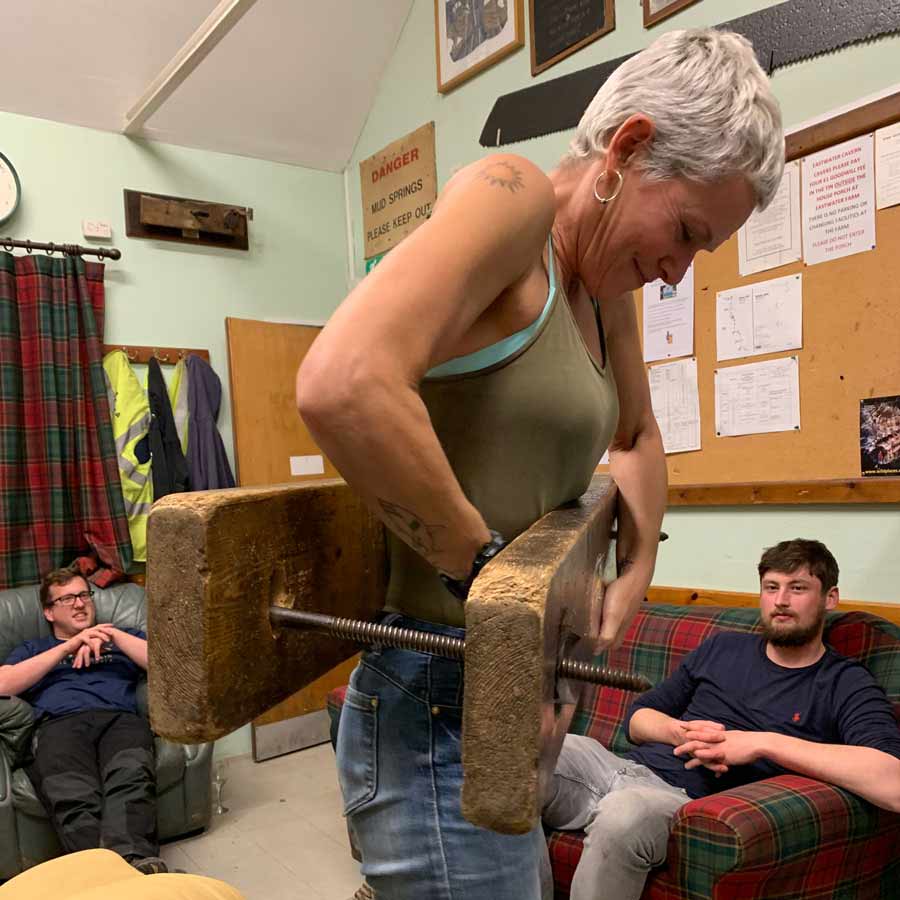
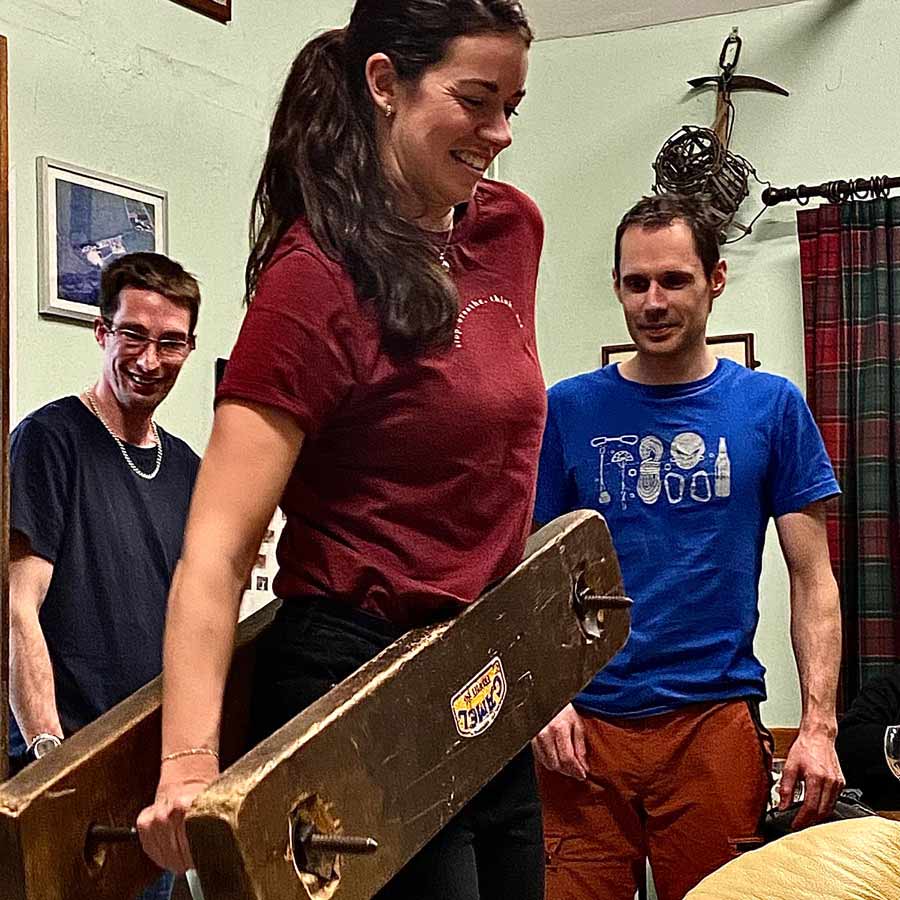
Chris appeared, having been “rescued” by Cave Diving Group divers who were also Mendip Cave Rescue members – they all looked remarkably energised considering they had spent hours practicing moving a casualty through a cave system. As the evening progressed, they decided it was time to torture the newbies by putting us in a human-sized vice that was delicately named ‘The Squeeze Machine’. Used to simulate squeezing through gaps in the rocks, Rannva and I quickly learned that whereas bums may squidge, hip bones and pelvises most definitely do not. The bruises were our fault. We got competitive.
The next morning, fuelled with porridge and excitement, we headed off across the fields with our Grown Ups – Chris, Connor Roe (another Thai Cave Rescue Diver), Michael Thomas, Rob Thomas and Aleksandra Ciesielka. The kit we wore seemed suspiciously tech-free compared to the world of scuba – J2 baselayer, a fluffy onesie, overalls and wellies, topped off with a helmet and light – but we soon came to appreciate the need for simplicity. We were to follow a water course down into the cave so streamlined is good, and everything is going to get wet. Very very wet.
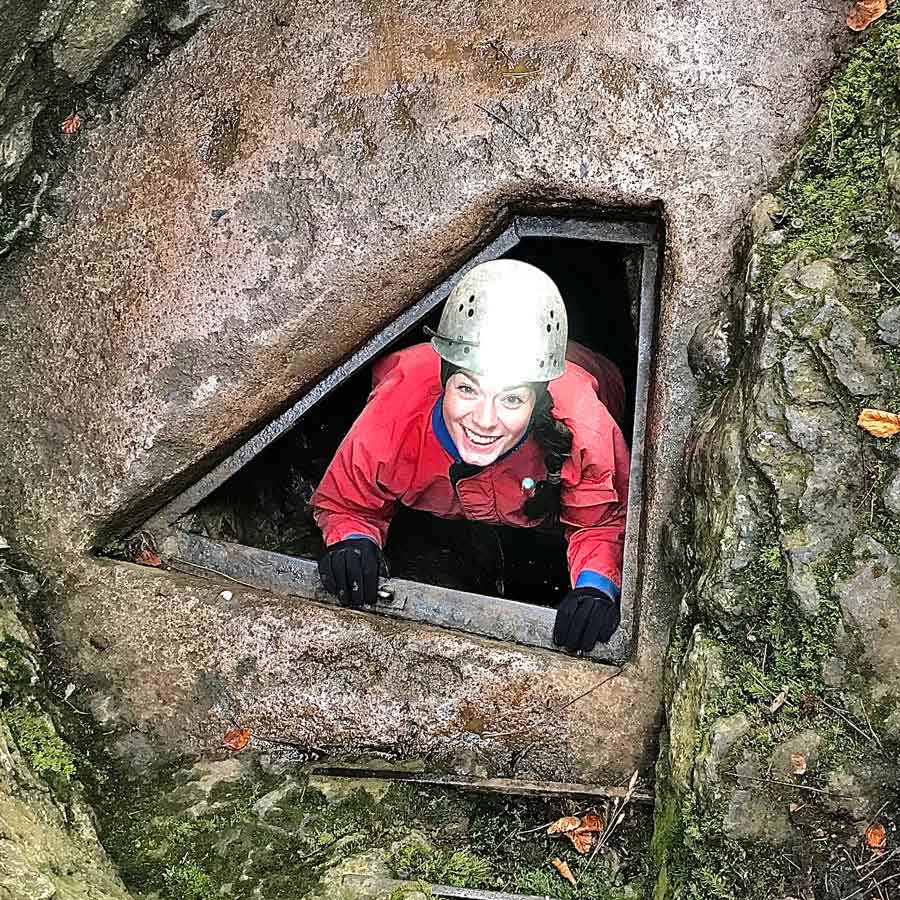
Rannva knows caves as things you can float through. My concept of caves is up there with a 5 year olds – wide entrances that you can wander into, perhaps with a dragon crouched inside for dramatic effect. Swildon’s Hole was none of these. As soon as we were through the unassuming hole in the ground, we were in a world of bulging rock formations creating tunnels of alternating smooth and jagged walls, and ceilings dripping with what looked like the waxy residue of enormous candles left to burn and melt. The ground was a carpet of stones, rocks and boulders, often offering enticing holes to crawl though or stretch across, or teasing with wobbling stepping stones in deceptively shallow looking “puddles”. But the real tour de force was the water, pushing its course through the limestone with determination and purpose. Chris told us that the stream brought with it fresh air which kept the cave from getting stale, but it also gave the cave an energy and the noise of the rushing water added to the excitement of this stunning playground.


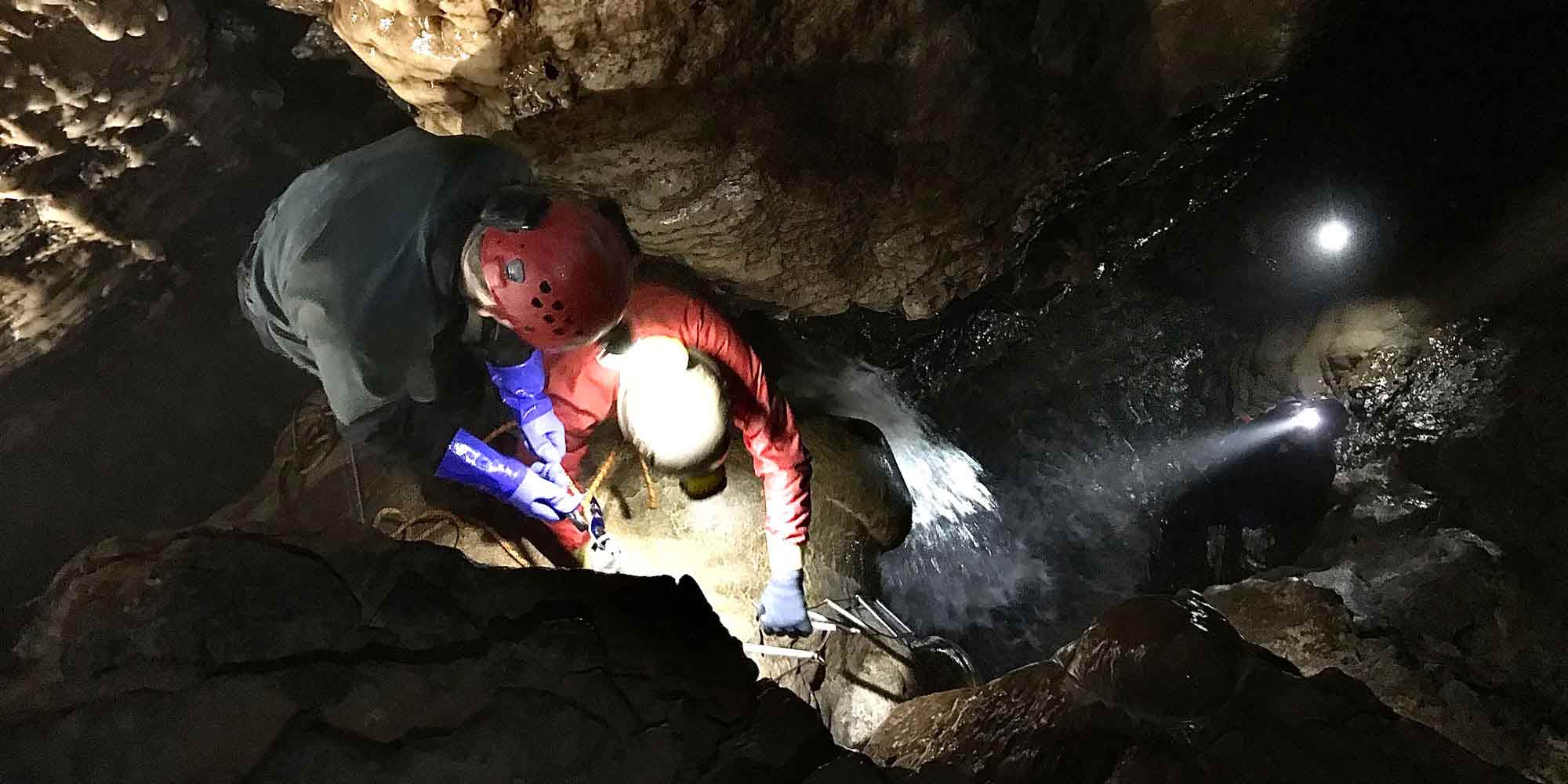
Moving through the cave was not straightforward – it required a degree of forward planning and a visual awareness of the space that our bodies took up, and judging by our bruises, this was something that Rannva and I had not quite mastered. There were spaces where we had to slither in feet first, flip over onto our bellies and then clamber down, gripping with fingers and groping for toe holds with our feet. There were little holes in the rock face to climb through that required us to twist and rotate our hips until they fitted, like the wooden shape sorters for toddlers – and narrow low tunnels that had us crouching or crawling – stand up too soon and you know about it. Forget gym memberships, caving works every muscle you can think of, and quite a few more that you can’t.
When we reached Sump I, a wall of rock looked back at us with a small, shallow pond at its base. We looked carefully and saw a piece of rope leading from the bottom of the wall through the water and towards our feet. “Right” Connor said, “who’s up for a bit of freediving?” Well, always, but where? “Lie down in the water, grab the rope, take a deep breath and go under the wall. You’ve got a foot or so of height.” Without a second glance, Rannva was in and we watched as the soles of her wellies disappeared beneath the rock. Moment’s later we heard a loud “woo hoo!” and I needed no further encouragement – deep breath, grab the rope and slide under – I defy anyone to have MORE fun in a pool of icy cold water 100m below the ground. It was truly awesome.
As we got deeper in the cave, the formations changed. The wall patterns became very defined, there were deeper crevices and more ridges that we had to edge along in our overflowing wellies. I kept seeing hip joints everywhere – a very real reminder of what I was about to fracture if I made the wrong move. Rannva saw female genitalia, of which we’ll make no further comment.
At Sump II, we headed back – we were about 90 minutes along the route, the freedive to get through the sump was too far to do without masks, and we had the climb back up to the surface to contend with. Climbing, clambering, squeezing and crawling your way downhill is one thing – doing it uphill was a whole other ballgame that my arm and thigh muscles haven’t quite forgiven me for.


Next time you’re standing in a power shower, turn it on full blast and then look up. Then imagine you are halfway up a smooth rock face, hanging onto a wire rope ladder, wellies filled to the brim and water deafening as it crashes onto your head as you try to climb against the flow, blinded and praying your contact lenses are still in your eye somewhere. Welcome to climbing up a waterfall – quite possibly one of the most exhilarating, crazy things I have done. Granted, it was a baby waterfall, and granted, our Grown Ups had clipped us into harnesses, but the sheer thrill of the force of water and the achievement of reaching the top was literally breathtaking.
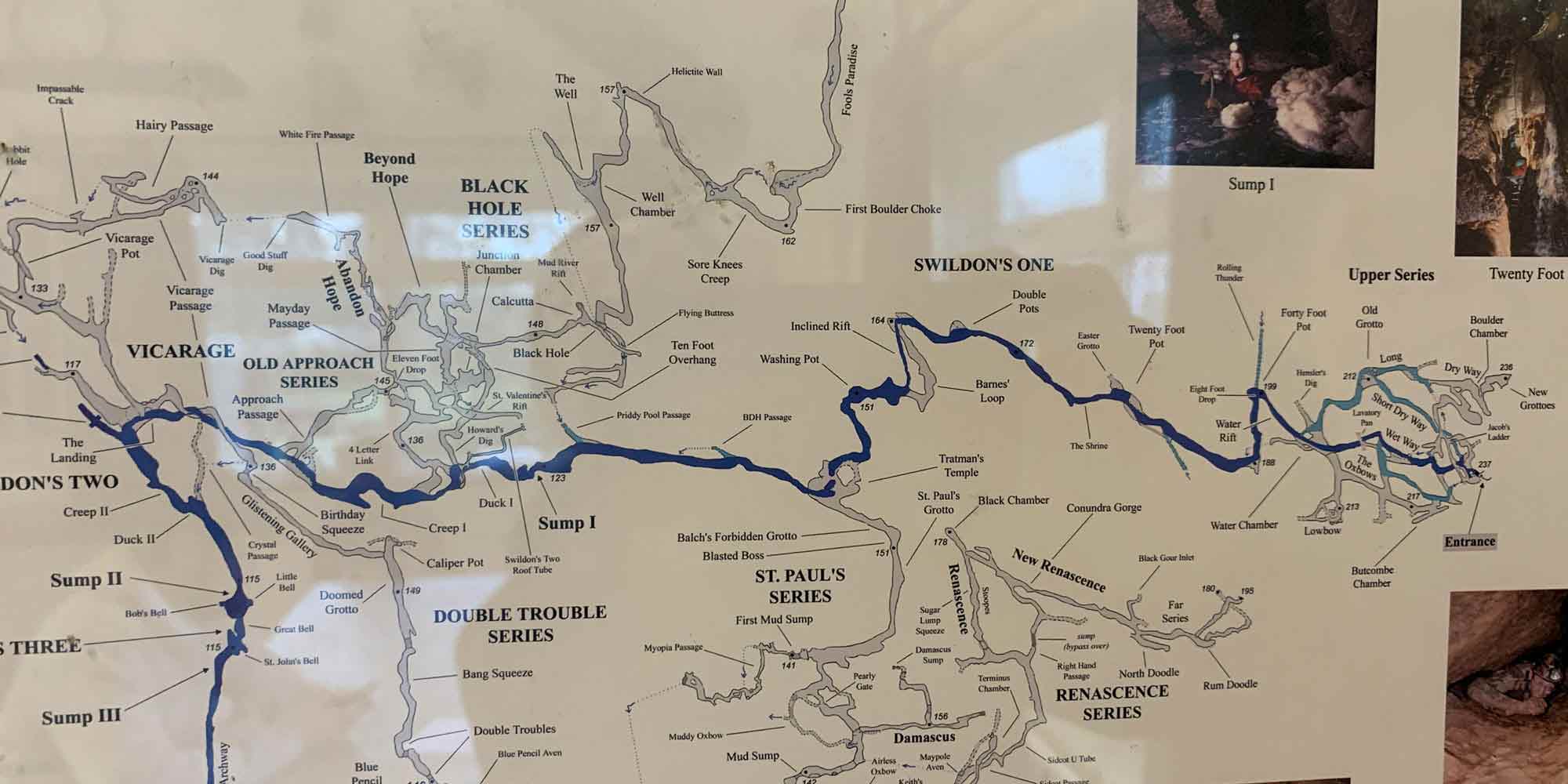
The most poignant part of the expedition (because I’m calling it that now) was when we left the path of the stream and turned off into a side pocket called Barnes’ Loop. This part of the cave was dry – the air felt still and the quiet was both calming and a little disconcerting. We took a few minutes to rest and Michael told us the story of when a flood had caused his own father to be trapped in the cave, the exit sealed off by a cascade of floodwater. John Thomas and two others took refuge in Barnes Loop and waited until the water receded and they could escape. It made caving very real for me and Rannva – it is immensely fun and energising but as with scuba, the safety drills, the practice and the training are all vital to ensure that if and when the unexpected happens, cavers are experienced enough to be able to deal with it.

The closeness of this caving community, the support between clubs and their warmth and generosity with visitors and new members means that there are going to be plenty of opportunities for us to return and learn safely. And there’s something about being in a hole underground – a wet, crazy, twisting, challenging, muddy hole that just makes you want to go back for more. As the local newspaper reported after John Thomas and friends had escaped the flood…
‘Back in Farnham on Monday evening, the three local pot-holers were chatting merrily about their experience. Asked if this had put them off, they said “Put us off? We’re going pot-holing again in three weeks’ time – to the same hole.”’